Fake Driving Licence Maker: The Ultimate Guide to Identifying Fraudulent IDs
Fake Driving Licence Maker

Fake Driving Licence Maker: The Ultimate Guide to Identifying Fraudulent IDs

Fake driving licence maker services are an unfortunate and illegal reality in today’s world, posing significant risks to public safety, national security, and business integrity. Whether you’re an employer verifying a hire, a law enforcement officer on duty, a bartender checking an ID, or simply a concerned citizen, knowing how to spot a counterfeit licence is an invaluable skill.
This comprehensive guide will arm you with the knowledge to detect forgeries, understand the sophisticated security features of legitimate licences, and comprehend the serious legal consequences of driving licence fraud. Our goal is not to instruct on how to create a fake ID, but to empower you with the tools to prevent fake identification from succeeding.
Understanding Driving Licence Fraud and Its Impact
Driving licence fraud is not a victimless crime. It facilitates a range of illegal activities that have far-reaching consequences for everyone. The use of a counterfeit driving licence can be a gateway to more serious offenses. Individuals may seek out a fake driving licence maker to conceal their true identity because they are underage, in the country illegally, have a suspended licence, or wish to commit financial fraud, like opening bank accounts or obtaining credit with stolen details.
This kind of document fraud undermines the systems we rely on for safety and security, from ensuring only qualified drivers are on the road to preventing identity theft. Understanding the motive is the first step in recognizing the prevalence and danger of driving licence scams.
The impact is multifaceted. For businesses like bars, clubs, and liquor stores, serving a minor with a fake ID can result in massive fines, loss of liquor licenses, and reputational damage. For employers, especially in driving, logistics, or security roles, hiring someone with fraudulent credentials creates huge liability issues. For society, it means potentially uninsured and unqualified drivers endangering lives on our roads. The ripple effects of a single fraudulent driving licence are profound, making ID verification a critical line of defense.
The Anatomy of a Genuine Licence: Key Security Features to Know
To identify a fake, you must first know what a real one looks like. Governments invest millions in incorporating advanced, hard-to-replicate Fake Driving Licence security features into their licences. A proficient fake driving licence maker will attempt to copy these, but they often fall short upon close inspection. Here are the critical elements to examine:
1. Material and Feel
A genuine driving licence is typically printed on polycarbonate or PVC plastic, giving it a specific weight, flexibility, and crisp feel. It should not feel flimsy, overly glossy, or like a laminated piece of paper. Run your fingers over the surface; you should be able to feel raised text (especially the date of birth) and tactile patterns.
2. Microprinting
This is one of the most effective security features. Look for extremely small, crisp text that appears as a solid line to the naked eye. Use a magnifying glass or the zoom lens on your phone camera to check. On a real licence, this text will be perfectly clear and legible under magnification. A fake driving licence maker will often struggle to reproduce this, resulting in blurred, smudged, or non-existent microprint.
3. Holograms and Optical Variable Devices (OVDs)
Tilt the licence back and forth under a light. You should see colourful, shifting images or patterns that change appearance. These are often overlays of the state or country emblem, a repeating pattern, or a portrait of the holder. A common sign of a fraudulent driving licence is a static, printed-on hologram that does not change when moved.
4. Ultraviolet (UV) Light Features
Under a UV light, genuine licences reveal hidden imagery, patterns, text, or the holder’s photo that is invisible in normal light. Every driving licence verification toolkit should include a small UV light. A fake will usually have no reaction under UV light, or the features will be poorly printed and visible without the light.
5. Laser-Engraved Personalization
Real licences often use laser engraving, which burns information into the plastic layers. This creates text that is tactile and feels raised. It also prevents information from being altered. If you scratch the date of birth with your fingernail, it should be part of the card itself, not an applique that can peel off. This is a key differentiator in fake document identification.
6. Ghost Image and Overlapping Data
A secondary, smaller photograph of the holder (a “ghost image”) is a common feature. It is often overlapped by text or other data, proving the card was manufactured as a single unit. A fake ID might have this image clumsily pasted on top.
7. Data Consistency and Spelling
This is a simple but often overlooked check. Scrutinize all text for spelling errors, incorrect abbreviations, or illogical information. Check that the issue and expiry dates make sense. Cross-reference the person’s details—does the age seem to match the appearance? Inconsistencies are a massive red flag for licence forgery.
Why People Turn to a Fake Driving Licence Maker: The Motives Behind the Crime
The motivations for seeking out a counterfeit driving licence are varied, but they all stem from a desire to deceive an official system.
- Underage Access: The most stereotypical reason is for minors to gain access to age-restricted goods like alcohol, tobacco, or entry into clubs and bars.
- Identity Theft and Financial Fraud: A high-quality fake identification document is a cornerstone of identity theft. It can be used alongside other stolen personal information to apply for loans, credit cards, or government benefits.
- Circumventing Legal Penalties: Individuals with a suspended or revoked licence may use a fraudulent driving licence to continue driving illegally, posing an immense risk to other road users.
- Illegal Employment and Immigration: Those without the legal right to work in a country may use fake documents to secure employment. Similarly, a fake licence can be used to support other fraudulent identification claims.
- Concealing True Identity: Criminals involved in more serious offenses often use fake IDs to avoid detection by law enforcement, making it harder to track their movements and activities.
How to Spot a Fake Licence: The Hands-On Tactical Guide
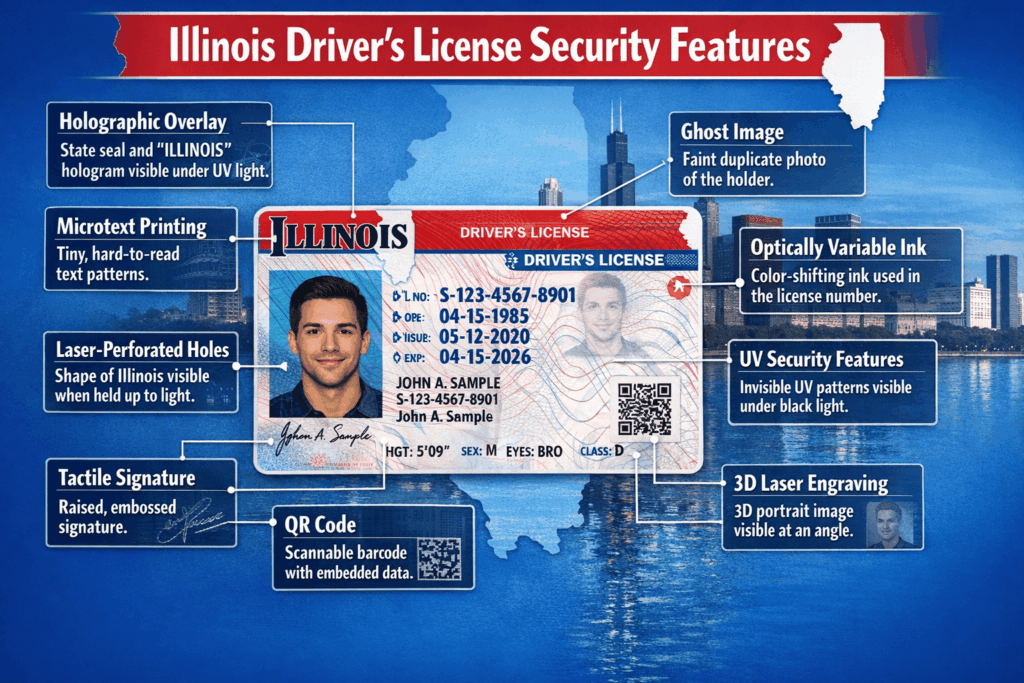
How to spot a fake licence requires a multi-sensory approach: look, feel, and examine. Don’t just glance; actively inspect. Here are the most common physical tells that indicate a fake driver’s license.
1. Visual Inspection: The First Line of Defense
Your eyes are your most powerful tool in fake licence detection.
- Print Quality and Resolution: Authentic licences are printed with high-resolution industrial printers. A product from a fake driving licence maker will often have inferior print quality. Look for blurred edges, smudged text, pixelated images, or incorrect colors. The background design should be sharp and clear, not fuzzy.
- Microprinting: This is a key security feature difficult for forgers to replicate. Legitimate licences contain extremely small text, often along a pattern line or under the photo, that appears as a solid line to the naked eye. Use a magnifying glass or your phone’s camera zoom. On a real ID, this text will be crisp and legible. On a counterfeit driving licence, it will be blurry, broken, or missing entirely.
- Ghost Images: Most modern licences feature a smaller, secondary photo of the holder, often faded into the background. Check its placement and clarity. A common mistake by a fake driving licence maker is making this image too dark, too light, or poorly aligned.
- Text and Font Consistency: Examine the font used for the bearer’s name, address, and date of birth. It should be perfectly consistent across the entire document. Licence forgery often involves manually adding details, which can result in font mismatches, uneven letter spacing, or incorrect alignment.
- UV (Ultraviolet) Features: This is a killer test for most fakes. Under a UV black light, genuine licences display hidden patterns, images, or text that are invisible in normal light. Every state and country has unique UV features. A fake ID will typically have no reaction under UV light or a poorly printed, incorrect pattern. A small UV light keychain is an inexpensive and highly effective tool for driving licence verification.
2. Tactile Inspection: The Feel of Authenticity
How a licence feels can be just as telling as how it looks.
- Material and Flexibility: Real licences are made of durable, semi-rigid PVC or polycarbonate plastic (Teslin). They have a specific weight and flexibility. Bend the licence. A genuine card will have a certain springy flexibility and snap back into shape. A fraudulent driving licence might feel flimsy, too thick, or too thin, like a cheap piece of plastic or laminated paper.
- Raised Text: Run your finger over the date of birth and other key details. On authentic licences, this text is often raised due to a laser-engraving process. You should be able to feel the texture. A fake driving licence maker using inkjet or offset printing cannot replicate this tactile feature; the surface will be smooth.
- Edges and Corners: Feel the edges of the card. A real licence has smooth, evenly rounded corners. A fake might have sharp, poorly cut, or uneven edges, especially if it was hand-cut after being printed on a sheet.
3. Data and Detail Verification: Cross-Checking the Information
A forger can replicate a template, but often fails on the details.
- Magstripe and Barcode: Swipe the magnetic stripe or scan the 2D barcode. The encoded information must exactly match the data printed on the front of the card. Inconsistencies are a major red flag. Many driving licence scams involve altering the visible print but failing to accurately update the encoded data.
- Holograms and Optically Variable Devices (OVDs): Tilt the card back and forth. Authentic holograms are layered into the card itself and will change colors or images dynamically. A cheap fake will often have a sticker-based hologram that looks flat, peels at the edges, or does not change convincingly.
- Check the Details: Does the information make sense? Is the person’s age plausible given their appearance? Is the address formatted correctly for that state? Does the licence number follow the official format? A common tactic is to use a legitimate address but with the wrong zip code. Simple online checks can verify these details.
Driving Licence Security Features: A Deep Dive
Understanding the advanced technology in your own licence is the best way to appreciate what a fake driving licence maker is up against. Governments continually invest in new features to stay ahead of forgers.
- Laser-Engraved Personalization: This is the gold standard. Data is burned into the polycarbonate layers of the card with a laser, creating the characteristic raised text. This makes alteration virtually impossible, as you cannot scrape off the information without destroying the card.
- Complex Background Patterns: Guilloche patterns are intricate, fine-line designs that are extremely difficult to scan or reproduce accurately. They often interweave with the photo and text.
- Machine-Readable Zones (MRZ): The barcode and magstripe are designed for electronic driving licence checks. They contain encrypted data that is difficult to forge accurately.
- Transparent Windows: Some newer licences (e.g., in the UK and Australia) have clear sections within the card that are impossible to laminate. These windows often contain holographic images that are part of the card, not applied to it.
- Tactile Structures: Some licences have specific areas with a distinct texture that can be felt by hand.
Penalties for Fake ID: The Serious Legal Consequences
The penalties for fake ID are severe and should deter anyone from considering using a fake driving licence maker. The laws vary by jurisdiction, but generally include:
- Criminal Charges: Possessing or using a fraudulent driving licence is a criminal offense, often classified as a felony. This can result in a permanent criminal record.
- Hefty Fines: Fines can range from hundreds to thousands of dollars.
- Imprisonment: Jail time is a very real possibility, especially for creating, selling, or using a fake ID to commit other crimes.
- Community Service: Courts often mandate community service.
- Driver’s Licence Suspension: Even if the fake was not used for driving, a court can suspend your real driver’s licence for a significant period.
- Immigration Consequences: For non-citizens, a conviction for document fraud can lead to deportation, denial of naturalization, or being barred from re-entering the country.
- Future Opportunities: A criminal record can jeopardize future employment, educational opportunities, and professional licensing.
Driving Licence Verification: Techniques for Businesses and Authorities
For those in positions requiring frequent ID verification, a systematic process is crucial.
- Train Your Staff: Ensure every employee who checks IDs knows the security features of licences from your state and surrounding areas. Keep an updated guidebook or digital resource handy.
- Establish a Routine: Follow the same steps every time: Look, Feel, Tilt, Check. Don’t rush.
- Use Technology: Invest in a UV light and a barcode scanner. There are also advanced fake licence detection apps and devices that can read and verify the encrypted data on the card.
- Ask Questions: Engage the person. Ask for their zip code, their star sign, or the year they were born. Someone using a fake might hesitate or get the answer wrong.
- Trust Your Instincts: If something feels “off,” even if you can’t pinpoint it, it’s okay to refuse service and escalate the situation to a manager or security.
Fake Driving Licence Maker: How to Identify a Counterfeit ID?
Welcome to our comprehensive guide on fake driving licence maker operations and, more importantly, how to protect yourself from the growing problem of driving licence fraud. This page is designed as a detailed FAQ to educate the general public, employers, and security personnel on the intricacies of counterfeit identification.
The proliferation of sophisticated fake driving licence maker services online poses a significant threat to security, safety, and legal compliance. Our goal is to empower you with the knowledge to spot these forgeries, understand the risks involved, and know what steps to take if you encounter one.
Fake Driving Licence Maker: What Are the Common Types of Driving Licence Fraud?
Fake driving licence maker operations fuel several types of fraud, each with serious consequences. Understanding the motive behind the fake ID can sometimes help in identifying it.
The most common types of fraud include:
- Underage Access Fraud: This is the most prevalent use, where minors obtain fake identification to purchase alcohol, tobacco, or gain entry to age-restricted venues like clubs and casinos.
- Identity Theft: A criminal will use a fake driver’s license that bears the details of a real person (name, address, date of birth) but their own photograph. This is used to open bank accounts, obtain credit, or commit other financial crimes in the victim’s name.
- Licence Avoidance: Individuals who have had their legitimate licence revoked or suspended due to traffic offences or DUIs may use a fraudulent driving licence to continue driving illegally. This poses a massive public safety risk.
- Immigration and Employment Fraud: Individuals who are not legally permitted to work in a country may use counterfeit documents to secure employment. Employers who fail to conduct proper driving licence verification checks can face severe penalties.
- Synthetic Identity Fraud: This is a more complex scheme where a fake driving licence maker creates an ID using a combination of real and fabricated information (e.g., a real Social Security number with a fake name). This “synthetic” person is then used to build credit and commit large-scale fraud over time.
Fake ID: What Are the Immediate Physical Signs of a Counterfeit Licence?
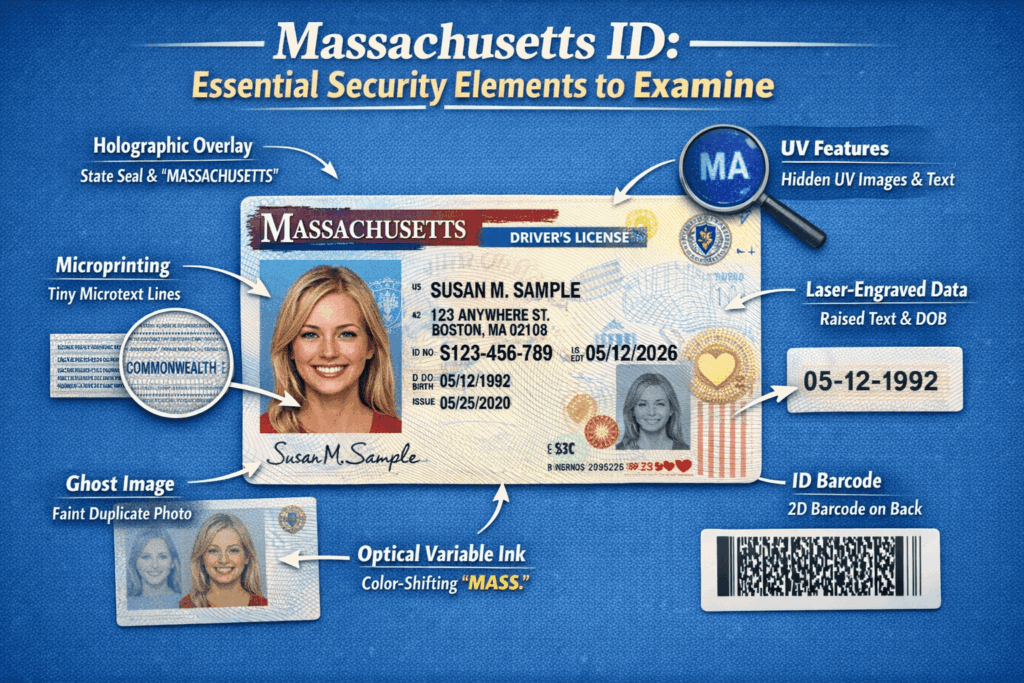
Fake ID detection often starts with a simple physical inspection. While fake driving licence maker technology is always improving, many counterfeits still have tell-tale signs that you can spot with a careful eye.
- Feel and Flexibility: A genuine driving licence is printed on polycarbonate or PVC, a specific type of durable plastic. It should feel crisp, have a certain rigidity, and snap back when bent. A counterfeit driving licence is often printed on lower-quality plastic or even laminated paper, making it feel flimsy, overly flexible, or unusually thick.
- Edges and Corners: Check the edges of the card. A real licence is die-cut, meaning the edges are smooth and uniform. A fake might have rough, uneven, or sharp edges. The corners should be perfectly rounded.
- Print Quality: Look closely at the text and images. Authentic licences use high-resolution printing that is sharp and clear. A fake driving licence maker might use lower-quality printers, resulting in blurred text, pixelated images, or faded colours. Check for spelling and grammatical errors – these are huge red flags.
- Ghost Image: Most modern licences have a smaller, faint secondary photo of the holder elsewhere on the card (often overlayed with text or patterns). This is difficult to replicate. On a fake, this ghost image might be missing, too dark, too light, or poorly aligned.
- Microprinting: This is a key security feature. Genuine licences have extremely small text that appears as a solid line to the naked eye but is legible under magnification. A fake driving licence maker cannot easily reproduce this; under a magnifying glass or loupe, the microprint will appear blurry or as a solid line.
Driving Licence Security Features: What Advanced Elements Should I Look For?
Beyond basic inspection, modern licences are equipped with sophisticated driving licence security features designed to thwart counterfeiters.
Familiarizing yourself with these can turn you into an expert at fake licence detection.
- Holograms and Optically Variable Devices (OVDs): Tilt the card back and forth. You should see colourful, dynamic holograms that change images or colours. These are extremely difficult and expensive for a fake driving licence maker to replicate accurately. Fakes often use simple shiny stickers that look static and cheap.
- Ultraviolet (UV) Light Features: Under a UV light, genuine licences will reveal hidden patterns, images, text, or fluorescent fibres woven into the plastic. These are invisible under normal light. A significant portion of counterfeit driving licence documents will have no UV features, or they will be poorly printed and clearly visible without UV light.
- Tactile Text: Run your finger over the card’s surface. On a real licence, certain text (like the driver’s name or date of birth) is often raised through a process called laser engraving. You should be able to feel the texture. Most fakes are flat, printed surfaces.
- Laser-Engraved Personalization: High-security licences use lasers to burn the patient’s data and photo into the layers of polycarbonate. This makes it nearly impossible to alter. If you see signs of tampering, like lifted laminate or information that looks scratched off and rewritten, it’s a clear sign of document fraud.
- Machine-Readable Zone (MRZ): The two or three lines of angled text at the bottom of the card are designed for electronic scanners. The information encoded here must exactly match the visible text on the card. A fake driving licence maker might get the visible details right but mess up the complex encoding of the MRZ.
Driving Licence Verification: What Are the Procedural and Behavioral Red Flags?
Driving licence verification isn’t just about the physical document; it’s also about the person presenting it and the situation.
- Mismatched Information: Does the physical description on the licence (height, weight, eye colour) match the person in front of you? Does their approximate age match the date of birth? A 21-year-old birth date on someone who looks 16 is a major red flag.
- Nervous Behavior: Is the person overly nervous, avoiding eye contact, or in a hurry? While some nervousness is normal, excessive anxiety can indicate that they are presenting a fake identification.
- Inconsistencies in Story: If you’re in a situation where conversation is natural (e.g., a bartender or bank teller), ask a simple question based on the ID, like “What’s your zodiac sign?” or “How do you spell your street name?” Someone using a stolen identity or a completely fake one may hesitate or get it wrong.
- Out-of-State or Country Licences: Be extra vigilant with licences from other jurisdictions. While most are legitimate, a fake driving licence maker often produces IDs from states or countries they are most familiar with. Have a reference guide or official state website bookmarked to check standard security features for unfamiliar licences.
Penalties for Fake ID: What Are the Legal Consequences?
Understanding the severe penalties for fake ID is a crucial deterrent and an important part of this discussion. The laws vary by jurisdiction but are universally strict.
- For the User: Possessing or using a fraudulent driving licence can result in criminal charges that may include fines ranging from hundreds to thousands of dollars, community service, and even jail time. It can lead to a permanent criminal record, which affects future employment, educational opportunities, and professional licensing.
- For the Creator/Seller: Operating as a fake driving licence maker or selling counterfeit documents is a serious felony. Convictions can lead to lengthy prison sentences (often 5-15 years or more) and massive fines. Federal charges often apply, especially if the operation crosses state lines or involves identity theft.
- For Businesses: Establishments that serve alcohol to minors using fake IDs can face heavy fines, temporary suspension of their liquor license, or permanent revocation. Employees who fail to check IDs properly can also be held personally liable and fined. In cases of driving licence scams that lead to accidents or other damages, civil lawsuits can be devastating.
How to Spot a Fake Licence: A Step-by-Step Guide for Retailers and Security
If your job involves checking IDs, having a systematic process for how to spot a fake license is essential.
- Ask for the ID: Always ask for the physical licence. Do not accept a digital photo on a phone.
- Feel the Card: Assess the weight, flexibility, and texture. Is it too flimsy? Do the edges feel rough?
- Check the Photo: Does the photo match the person? Look at the face shape, eyes, nose, and hairline. Are there signs of photo substitution on the card itself?
- Examine the Text: Look for misspellings, incorrect fonts, and poor print quality. Feel for raised text.
- Verify the Data: Check the expiration date. Does the birth date make the person old enough? Do the physical descriptors (height, weight) seem plausible?
- Look for Security Features: Tilt the card to check holograms. If you have a UV light, use it. Look for microprinting with a magnifier if possible.
- Engage the Holder: Talk to the person. Ask a question about the information on the card to see if they can answer smoothly.
- Trust Your Gut: If something feels off, even if you can’t pinpoint it, you have the right to refuse service. It is always better to be safe than sorry.
Fake Document Identification: How Does This Relate to Other Forms of ID?
The principles of fake document identification for driving licences apply to many other forms of government-issued ID, such as passports, national ID cards, and proof-of-age cards. They all share similar advanced security features: holograms, UV elements, microprinting, and specific plastic substrates. Learning to identify a fake driving licence maker’s work provides a foundational skill that helps in spotting other types of fraudulent documents, creating a broader shield against identity-related crimes.
Driving Licence Checks: What Should Employers Do?
For employers, conducting thorough driving licence checks is a critical part of the hiring process, especially for roles that involve driving or handling sensitive information.
- Physically Inspect the Document: Use the step-by-step guide above to inspect the licence presented.
- Check for Validity: Verify the licence is current and not expired. Check for any endorsements or restrictions that are relevant to the job (e.g., a commercial driver’s license requirement).
- Make a Photocopy or Scan: Keep a copy of the front and back of the licence for your records, in accordance with local data privacy laws.
- Use Electronic Verification (if available): For high-risk roles, consider using an electronic ID verification service that can cross-reference the licence details with official databases.
- Be Consistent: Apply the same rigorous check to every applicant to avoid claims of discrimination.
Driving Laws and Licence Fraud: A Broader Impact
The scourge of driving licence fraud has a ripple effect that extends beyond individual crimes. It undermines the integrity of entire systems. Driving laws are in place to ensure that every person operating a vehicle on public roads has been properly trained, tested, and is medically fit to do so.
When a fake driving licence maker enables an unqualified, untested, or dangerous driver to get behind the wheel, they jeopardize the safety of every other road user. The entire system of trust that our licensing authority is built upon is eroded, leading to increased insurance premiums, more rigorous and expensive security measures, and a general decrease in public safety.
Conclusion: Vigilance is Key
The battle between fake driving licence maker operations and authorities is ongoing, with technology evolving on both sides. However, the human element of vigilant, informed inspection remains the most consistent and effective defense against driving licence fraud.
By understanding the sophisticated security features embedded in genuine licences, employing a thorough tactile and visual inspection process, and being aware of the grave penalties for fake ID, we can all play a part in upholding security and safety. Whether you’re on the front lines at a bar or just a curious individual, this knowledge empowers you to protect your business, your community, and yourself from the dangers of counterfeit driving credentials documents. Remember, when in doubt, you have the right to refuse and report. Stay informed, stay alert, and help keep our roads and identities secure.


Comments
Post a Comment