Fake Car Title: Exposing the Hidden Dangers
Fake Car Title: Exposing the Hidden Dangers

Fake Car Title: Exposing the Hidden Dangers of Vehicle Title Fraud
Every year, thousands of unsuspecting buyers fall victim to a Fake Car Title scheme, losing money and facing legal headaches. This article explains exactly what a counterfeit title looks like, how fraudsters produce it, and what you can do to protect yourself.
Key Takeaways
- A Fake Car Title is any title document that has been altered, forged, or completely fabricated to misrepresent a vehicle’s history.
- Common tactics include title washing, VIN cloning, and using stolen blank title forms.
- Red flags: mismatched VINs, missing state seals, inconsistent font, and unusually low prices.
- Always run a VIN check, request a title history report, and verify the title with the issuing DMV before purchase.
- If you discover a fraudulent title, report it to local law enforcement and your state’s motor vehicle agency immediately.
Understanding Vehicle Titles and Their Importance
A vehicle title is the legal document that proves ownership. It contains critical data such as the Vehicle Identification Number (VIN), make, model, year, and owner’s name. When a title is clean, it provides confidence that the car has not been severely damaged, stolen, or subject to liens.
Without a valid title, you cannot legally register, insure, or sell the vehicle. Consequently, any discrepancy in the title raises immediate suspicion and can lead to costly complications.
The Rise of Fake Car Title Schemes in the Used‑Car Market
In recent years, law enforcement agencies have reported a surge in Fake Car Title incidents across multiple states. Fraudsters exploit gaps in title verification processes, especially in private sales and online marketplaces.
These schemes often target buyers seeking bargain deals, promising low prices for seemingly pristine vehicles. Unfortunately, the allure of a bargain masks a dangerous reality.
How Criminals Create a Fake Car Title
Fraudsters typically begin by obtaining a legitimate title template, either by stealing blank forms from a DMV office or replicating them using high‑resolution scanners. They then alter key fields such as the VIN, odometer reading, or branding status.
In some cases, criminals use sophisticated software to forge state seals and signatures, making the counterfeit document nearly indistinguishable from an authentic title at first glance.
Common Scenarios Involving Fake Car Titles
Understanding the typical situations where a counterfeit title appears helps buyers stay vigilant. The following sections outline the most frequent scenarios reported by consumer protection agencies.
Title: Washing Through Interstate Transfers
One prevalent method involves moving a salvaged or flood‑damaged vehicle across state lines to obtain a clean title. Fraudsters exploit differing branding rules between states, effectively “washing” the negative history.
For example, a car declared a total loss in State A may be transferred to State B, where the damage threshold for a salvage brand is higher, resulting in a seemingly clean title.
VIN Cloning and Title Duplication
VIN cloning occurs when a thief copies the VIN from a legally owned vehicle and applies it to a stolen car of a similar make and model. The cloned VIN is then placed on a fraudulent title, allowing the stolen vehicle to be sold as legitimate.
Because the VIN matches the title documents, casual inspections often miss the deception, especially if the exterior appearance aligns with the cloned vehicle.
Counterfeit Titles from Stolen Blank Forms
Some criminal rings steal blank title forms directly from DMV offices or print shops. Using high‑quality printers, they fill out the forms with fabricated information, producing a title that looks authentic to the untrained eye.
These forged documents frequently lack the proper security features, such as microprinting or watermarks, but many buyers do not know to look for them.
Legal Consequences of Dealing with a Fake Car Title
Possessing, transferring, or selling a vehicle with a counterfeit title is a serious offense in virtually every jurisdiction. Penalties can include fines, restitution, and even imprisonment.
Beyond criminal liability, buyers may face civil lawsuits from the true owner, insurance claim denials, and difficulty obtaining financing for future vehicle purchases.
State‑Level Penalties and Federal Oversight
Most states classify title fraud as a felony, with penalties ranging from one to five years in prison and fines up to $10,000. Repeat offenders often face enhanced sentencing.
At the federal level, the Vehicle Title Fraud Prevention Act empowers the Department of Justice to prosecute cross‑state title fraud schemes, adding another layer of deterrence.
Impact on Victims and the Market
Victims of Fake Car Title scams frequently suffer financial loss equal to the vehicle’s purchase price, plus additional costs for legal fees and alternative transportation. The broader market also suffers, as fraud erodes consumer trust in used‑car transactions.
Detecting a Fake Car Title: Red Flags and Verification Steps
Spotting a counterfeit title requires attention to detail and a systematic approach. Below are practical indicators and verification methods that any buyer can employ.
Visual Inspection Checklist
Begin by examining the physical document. Look for inconsistencies in font type, size, and alignment. Genuine titles typically use a standardized font that is difficult to replicate perfectly.
Check for the presence of state‑specific security features such as holograms, watermarks, or microprinted text. Missing or poorly rendered features often signal a forgery.
Verify that the VIN on the title matches the VIN stamped on the vehicle’s dashboard, driver‑side door jamb, and engine block. Any mismatch is a major red flag.
Utilizing Vehicle History Reports
Services like Carfax, AutoCheck, and the National Motor Vehicle Title Information System (NMVTIS) provide title history reports that reveal branding, salvage status, and reported accidents.
If the report shows a clean title while the physical document indicates a salvage brand, or vice versa, you likely have a counterfeit title.
These reports also flag title transfers that occur in rapid succession, a common tactic in title‑washing schemes.
Contacting the Issuing DMV
The most reliable verification method is to contact the Department of Motor Vehicles that supposedly issued the title. Provide the VIN and request confirmation of the title’s status.
Many DMVs offer online verification portals; others require a phone call or in‑person visit. A legitimate title will be confirmed in their system, whereas a fake will return no record or show discrepancies.
Protecting Yourself When Buying a Used Car
Prevention is always better than remediation. Adopting a cautious buying strategy dramatically reduces the risk of encountering a Fake Car Title.
Conduct a Pre‑Purchase Inspection
Before handing over any money, have a trusted mechanic inspect the vehicle. While this does not directly verify the title, it can uncover hidden damage that may explain why a seller is pushing for a quick sale.
Mechanics can also spot signs of VIN tampering, such as mismatched welds or altered VIN plates.
Use Escrow Services for High‑Value Transactions
For purchases exceeding a few thousand dollars, consider using an escrow service. The service holds the buyer’s funds until the title is verified and transferred correctly.
This added layer of security discourages sellers who intend to provide a fraudulent title, as they know the funds will not be released without proper documentation.
Trust Your Instincts and Walk Away if Necessary
If a deal seems too good to be true, it probably is. High-pressure tactics, reluctance to provide documentation, or vague answers about the vehicle’s history should raise immediate concerns.
Walking away from a suspicious transaction protects you from potential financial loss and legal entanglements.

The Role of DMVs and Title Services in Preventing Fraud
State motor vehicle agencies are on the front lines of combating title fraud. Recent initiatives aim to strengthen security and improve verification processes.
Enhanced Security Features on Blank Titles
Many states have upgraded their blank title stock to include advanced security elements such as laser‑etched holograms, UV‑reactive inks, and tamper‑evident coatings.
These features make it significantly more difficult for counterfeiters to reproduce authentic‑looking titles without specialized equipment.
Real‑Time Title Verification Systems
Several DMVs now offer real‑time online verification portals where dealers, lenders, and consumers can enter a VIN and instantly view the current title status.
These systems reduce reliance on paper documents and provide an immediate check against the state’s official records.
Collaboration with Law Enforcement
DMVs routinely share data with local police and federal agencies to identify patterns of title fraud. Joint task forces have led to numerous arrests and the recovery of thousands of fraudulent titles.
Technological Tools for Title Verification
Advancements in technology have empowered consumers to detect Fake Car Title schemes more effectively than ever before.
Mobile Apps for VIN Scanning
Numerous smartphone applications allow users to scan a vehicle’s VIN barcode and instantly retrieve title history, accident reports, and recall information.
Apps such as VINCheck Pro and EpicVIN provide user‑friendly interfaces and often include alerts for title washing or salvage branding.
Blockchain‑Based Title Registries
Experimental programs in a few states are testing blockchain technology to create immutable title records. Once a title is recorded on the blockchain, any attempt to alter it would be immediately evident.
While still in pilot stages, blockchain promises to drastically reduce the opportunity for counterfeit titles to enter circulation.
AI‑Powered Document Analysis
Artificial intelligence tools can analyze scanned title documents for anomalies in font, layout, and security features. These systems compare the submitted document against a database of authentic titles and flag potential forgeries.
Dealers and lenders are beginning to integrate AI verification into their loan approval workflows, adding an extra layer of protection.
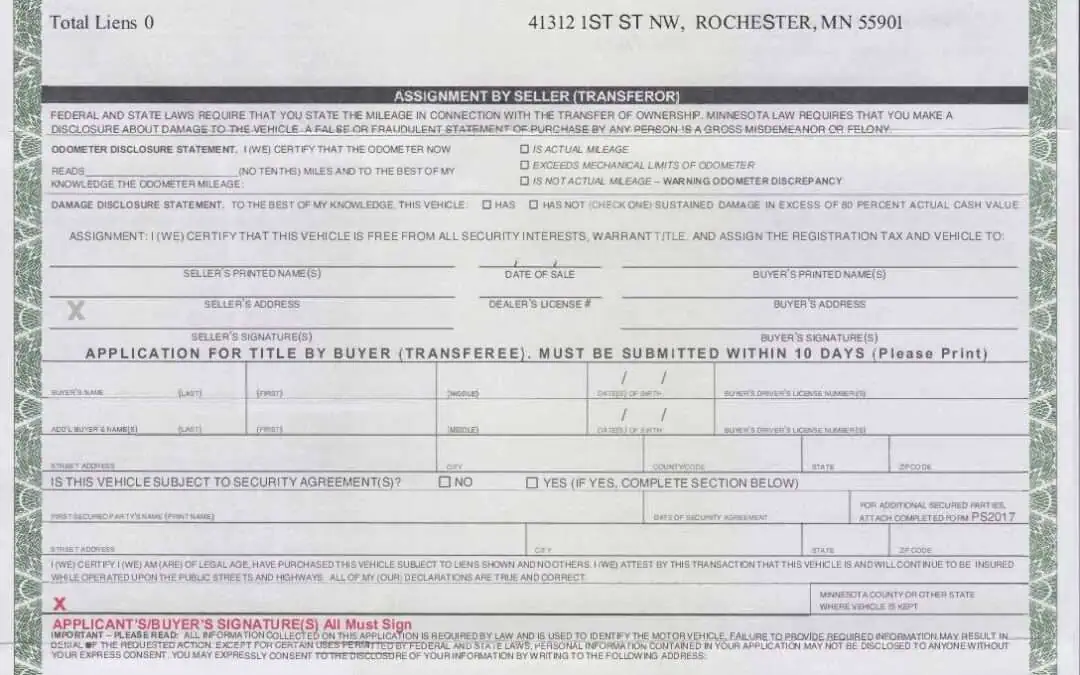
Real‑World Case Studies: Lessons Learned from Fake Car Title Incidents
Examining actual incidents helps illustrate the sophistication of these scams and the importance of diligence.
Case Study 1: The Interstate Title‑Washing Ring
In 2022, a multi‑state investigation uncovered a ring that transported flood‑damaged vehicles from the Gulf Coast to Midwest states with lax branding laws. The gang obtained clean titles in the destination states and sold the cars at inflated prices.
Law enforcement recovered over 150 vehicles and charged 12 individuals with felony title fraud. Buyers who performed an NMVTIS check before purchase avoided loss, while those who relied solely on the paper title suffered significant financial harm.
Case Study 2: VIN Cloning on Online Marketplaces
A popular online classifieds site became the venue for a VIN cloning scheme in early 2023. Fraudsters posted ads for late‑model sedans, providing VINs that matched legitimate vehicles owned by unsuspecting individuals elsewhere.
Several buyers discovered the fraud after attempting to register the cars and receiving notices of duplicate VINs. The investigation led to the arrest of the perpetrators and the recovery of the cloned vehicles.
Case Study 3: Counterfeit Titles from Stolen Blank Forms
In late 2021, a DMV office in the Southeast reported a theft of several hundred blank title forms. Within weeks, forged titles began appearing in private sales across the region.
Alert citizens who noticed missing state seals and inconsistent font reported the fraud, prompting a rapid response that halted further distribution of the counterfeit documents.
Frequently Asked Questions About Fake Car Titles
What exactly is a Fake Car Title?
A Fake Car Title is any title document that has been altered, forged, or completely fabricated to misrepresent a vehicle’s history, ownership, or legal status. This includes changing the VIN, odometer reading, branding status, or using stolen blank forms to create a false document.
How can I tell if a title is genuine or counterfeit?
Look for visual inconsistencies such as mismatched fonts, missing state seals, holograms, or watermarks. Verify that the VIN on the title matches the VIN on the vehicle’s dashboard, door jamb, and engine block. Run a VIN check through services like Carfax, AutoCheck, or NMVTIS, and contact the issuing DMV to confirm the title’s status.
What should I do if I discover I have purchased a vehicle with a Fake Car Title?
First, stop using the vehicle and avoid further transactions. Report the fraud to your local police department and your state’s motor vehicle agency. Provide them with all documentation, including the bill of sale and any communication with the seller. You may also need to consult an attorney to recover your losses and clear any legal complications.
Are there any legal penalties for selling a vehicle with a counterfeit title?
Yes. Selling a vehicle with a Fake Car Title is typically classified as a felony in most states, punishable by fines, restitution, and imprisonment ranging from one to five years. Federal charges may apply if the fraud crosses state lines, leading to additional penalties.
Can technology eliminate the risk of encountering a Fake Car Title?
While advanced tools such as blockchain title registries, AI document analysis, and real‑time DMV verification greatly reduce risk, no system is foolproof. Fraudsters continually adapt, so combining technology with diligent personal verification—such as VIN matching and physical inspection—remains the best defense.
Call to Action: Stay Protected and Informed
Don’t Let a Fake Car Title Ruin Your Purchase
Equip yourself with the knowledge and tools needed to verify every title before you buy. Get Your Free Title Verification Checklist
Conclusion
The prevalence of Fake Car Title schemes underscores the need for vigilance in every used‑car transaction. By understanding how counterfeit titles are produced, recognizing the warning signs, and employing reliable verification methods, you can protect yourself from financial loss and legal trouble.
Remember, a clean title is more than just a piece of paper—it is the foundation of lawful ownership. Take the time to verify, ask questions, and trust verified sources. Your diligence today ensures a safe and satisfying driving experience tomorrow.


Comments
Post a Comment